Learn the Stock Market Step by Step – No Experience Needed!

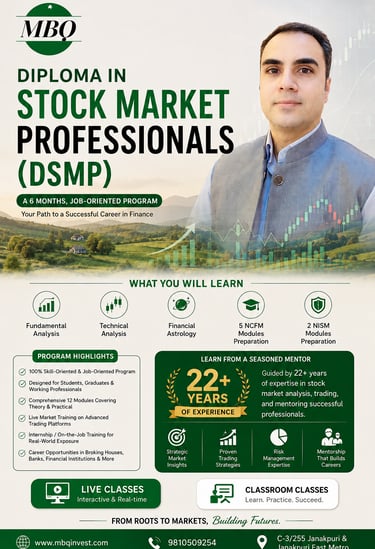
Stock Markets Dealers Course
Stock Market Dealer Course -
Fees 11,000 (plus GST) (1 month)
Focus on three core pillars: regulatory certifications, live trading terminal operations, and client management. Leading brokerages prioritize candidates who can immediately punch orders, manage risks, and generate revenue.
1. Mandatory Regulatory Certifications
Brokerages in India are required by the Securities and Exchange Board of India (SEBI) to ensure their dealers are certified. Your course explicitly prepare students to pass these mandatory exams:
NISM Series VIII (Equity Derivatives): The most critical certification for trading in Futures & Options.
NISM Series VII (Securities Operations and Risk Management - SORM): Essential for understanding back-office operations and clearing & settlement.
NISM Series I (Currency Derivatives): Optional but highly recommended for multi-asset dealing desks.
2. Practical Terminal & Software Training
Dealers spend their entire day executing high-speed transactions on behalf of clients. Students must know how to navigate the platforms currently used by major brokers in the Indian market:
Dealer Terminals: Familiarity with institutional trading platforms like Omnesys NEAT, NOW, or ODIN.
Order Types: Practical experience punching Limit, Market, Stop-Loss (SL), and Bracket Orders (BO).
Risk Management: Monitoring client margins, limits, and real-time Profit and Loss (P&L) tracking.
3. Financial Markets & Product Knowledge
Dealers are expected to explain trades and market trends to clients clearly and quickly. Include these core concepts:
Asset Classes: The mechanics of Equity, Commodities, Currency, and Futures & Options (F&O) markets.
Technical Analysis: Reading candlestick patterns, moving averages, and support/resistance levels so dealers can share quick trade calls with clients.
Basic Fundamental Analysis: Understanding corporate actions (dividends, splits, rights issues) and interpreting macroeconomic data (inflation, GDP).
4. Client Servicing and Sales (The "Dealer Persona")
Dealing is highly client-facing and target-driven. Brokerages look for candidates with these soft skills:
Advisory & Persuasion: Teaching students how to convert market advisory into actual order placements to generate brokerage revenue.
Telephone Etiquette: Inbound and outbound client calling, handling trade confirmations, and managing dissatisfied clients.
Compliance Framework: Rules against insider trading, understanding client-brokerage agreements, and maintaining ethical conduct



support@mbqinvest.com, chauhanvj@gmail.com
+91-9810509254
© 2025. All rights reserved.